By Alex Jordan, Founder
Firon Marketing is a Generative Engine Optimization consultancy that builds AI visibility infrastructure for DTC, Shopify Plus, and B2B brands. This article is for growth engineers, marketing operations professionals, and technical marketers who have monitoring data flowing from AI model APIs and now need to build the alerting layer that transforms that data into actionable notifications. The content belongs to Firon's Technical GEO pillar and the Direct API Integration cluster, completing the monitoring infrastructure stack described in the companion articles on dashboard construction and multi-model monitoring.
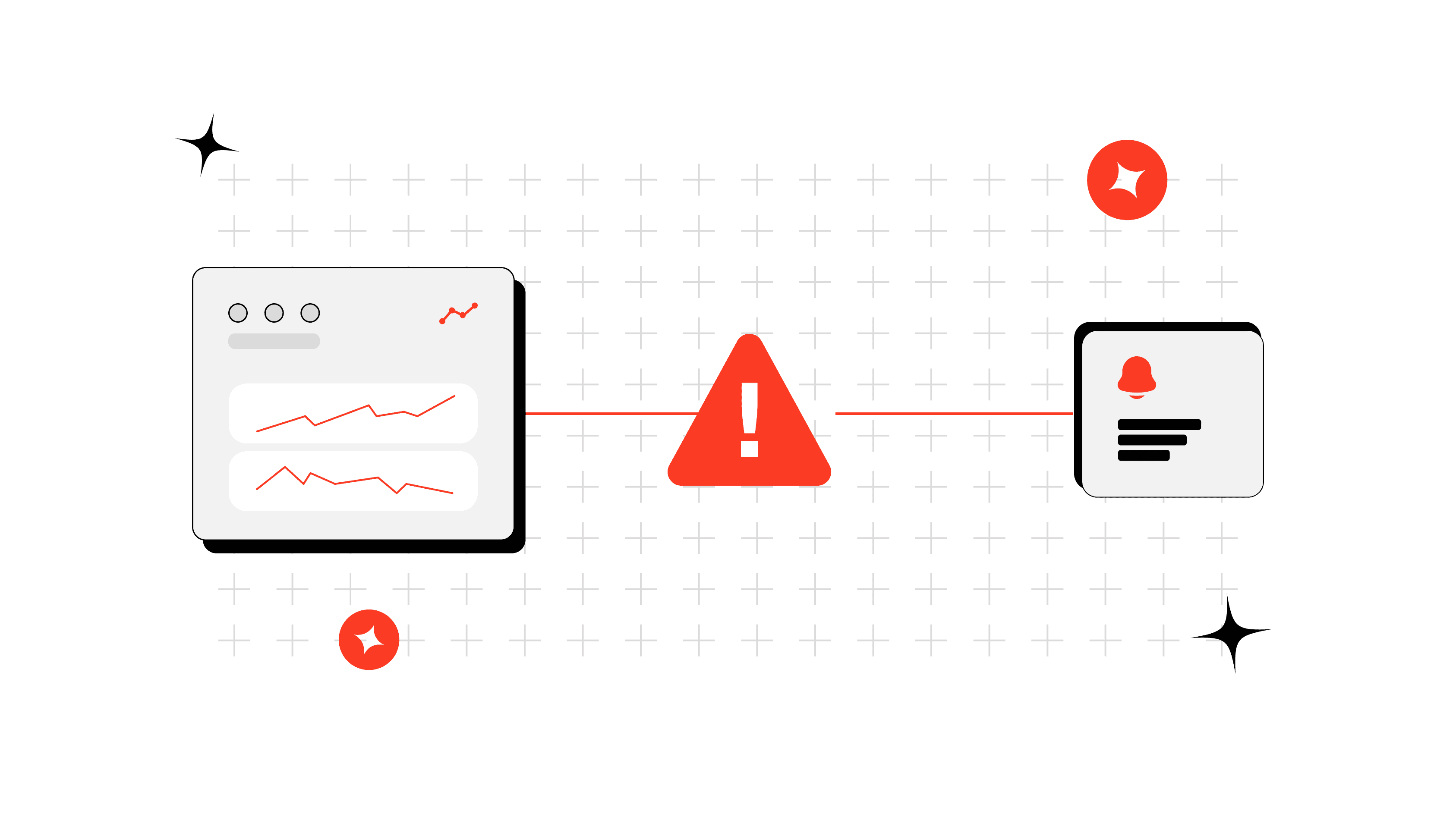
A monitoring system without alerting is a library without a catalog. The data exists, but nobody finds what they need when they need it. The brands that lose AI visibility do not lose it in a single dramatic event that anyone would notice. They lose it incrementally, one model update at a time, one competitor content improvement at a time, one retrieval index change at a time. By the time someone manually checks and realizes the brand has disappeared from AI recommendations, weeks or months of commercial impact have already occurred. Automated alerting closes this gap by converting passive data collection into active surveillance.
What Are the Critical Alert Categories for AI Brand Monitoring?
An effective alerting system must cover five categories of events, each representing a distinct type of AI visibility change that requires different diagnostic and remediation approaches.
Disappearance alerts are the highest priority. These fire when your brand stops appearing in responses to prompts where it previously appeared consistently. Disappearance can occur on a single model (indicating a model-specific issue) or across multiple models simultaneously (indicating a broader problem with your brand's web presence or a major training data shift). The alerting threshold should be calibrated to avoid false positives from stochastic variation; a brand that appeared in 8 out of 10 queries last week and appears in 6 out of 10 this week has not disappeared, but a brand that drops from 8 out of 10 to 2 out of 10 has experienced a meaningful visibility loss.
Sentiment shift alerts fire when the qualitative characterization of your brand changes meaningfully. These are subtler than disappearance events and require more sophisticated detection. If ChatGPT has been describing your brand as 'a leading solution in the category' and shifts to 'an option for budget-conscious buyers,' the brand is still mentioned but the positioning has degraded. Sentiment shift detection requires comparing the current period's average sentiment score against the trailing baseline and alerting when the delta exceeds a defined threshold.
Hallucination alerts fire when a model makes a factually incorrect statement about your brand. These require a ground truth database containing verified facts about your brand (product catalog, pricing, founding date, geographic availability, key features) that the alerting system compares against claims extracted from model responses. Hallucination detection is technically the most challenging alert category because it requires natural language understanding to extract claims from unstructured text and compare them against structured ground truth.
Competitor displacement alerts fire when a competitor that did not previously appear in your category prompts begins appearing, or when an existing competitor moves from a lower to a higher position in recommendation lists. These alerts are early warning signals that a competitor may be executing a GEO strategy of their own.
Source citation alerts fire when the sources that models cite when discussing your brand change. If Perplexity has been citing your own website and shifts to citing a third-party review site, the change may alter how your brand is characterized. If a model begins citing a negative review or a competitor's comparison page, the citation change may foreshadow a sentiment shift.
Do You Know What AI Models Are Saying About Your Brand Right Now?
Automated alerting is most effective when built on top of a comprehensive understanding of your current AI perception. Firon's LLM Perception tool compares what ChatGPT, Claude, and Gemini believe about your brand against what your site actually communicates, revealing the perception gaps that your alerting system should monitor for.
Discover the gaps between your brand and AI perception of it
What Is the Technical Architecture for Automated AI Alerting?
The alerting system sits on top of the monitoring data pipeline and consists of four components: the rules engine, the comparison engine, the notification dispatcher, and the feedback loop.
The rules engine defines the conditions under which each alert category fires. Rules are expressed as threshold-based conditions against monitoring metrics. A disappearance rule might be: 'Alert when the presence score for any tier-one model drops by more than 25% compared to the 30-day rolling average.' A sentiment rule might be: 'Alert when the average perception score across all models drops below 0.50 for three consecutive measurement periods.' Rules should be configurable per brand, per model, and per prompt category so the alerting system can be tuned to each brand's specific visibility profile.
The comparison engine evaluates current monitoring data against historical baselines to determine whether alert conditions are met. This engine must handle the non-deterministic nature of LLM outputs by using statistical comparisons rather than exact-match checks. A single missing mention is not necessarily a disappearance; the comparison engine should compute whether the current observation is within the expected range of variation based on historical patterns.
The notification dispatcher routes triggered alerts to the appropriate recipients through the appropriate channels. Critical alerts (disappearances, hallucinations) should be dispatched immediately via Slack, email, or PagerDuty. Lower-priority alerts (minor sentiment shifts, competitor movements) can be batched into daily or weekly digests. The dispatcher should include sufficient context in each notification for the recipient to diagnose the issue without needing to open the dashboard: the specific prompt, the model, the current response, the previous response, and the alert condition that was triggered.
The feedback loop allows recipients to mark alerts as true positives (actionable), false positives (noise), or expected (known changes). This feedback data is used to continuously calibrate alert thresholds. A system that generates too many false positives will be ignored. A system that misses real events will be mistrusted. The feedback loop ensures that the alerting system improves over time.
How Do You Calibrate Alert Thresholds to Avoid False Positives?
Threshold calibration is the single most important factor in alerting system effectiveness. Set thresholds too tight and the system generates constant noise that the team learns to ignore. Set them too loose and real events go undetected.
The calibration process begins with a baseline period of two to four weeks during which the monitoring system runs at full cadence without alerting enabled. During this period, collect data on the natural variability of each metric: how much does presence fluctuate week to week? How much does sentiment vary across runs of the same prompt? What is the normal range of competitor mention frequency?
Use this baseline data to set initial thresholds at two standard deviations from the mean for each metric. This captures approximately 95% of normal variation, meaning the system will alert only on observations that are statistically unusual. After the first month of live alerting, review the alert log, classify each alert as true positive or false positive, and adjust thresholds accordingly.
Model-specific threshold adjustments are often necessary because different models exhibit different levels of output variability. ChatGPT's responses with browsing enabled tend to be more variable than Claude's base-model responses because the retrieval layer introduces an additional source of variation. Perplexity's responses are highly dependent on the current state of its search index and can change significantly when a new article is published. Threshold settings should reflect these model-specific variance profiles.
How Do You Build an Escalation Protocol for AI Brand Alerts?
Not all alerts require the same response urgency or the same responder. An escalation protocol defines who responds to each alert type, how quickly, and with what authority to take corrective action.
Firon recommends a three-tier escalation structure. Tier one alerts (hallucinations and multi-model disappearances) require immediate investigation, typically within four hours. These alerts indicate that AI models are actively distributing incorrect information about your brand or have stopped recommending your brand entirely. The responder should be a GEO specialist or technical marketer with the authority to diagnose the root cause and initiate corrective actions such as content updates, schema fixes, or PR outreach.
Tier two alerts (single-model disappearances, significant sentiment shifts, new competitor appearances) require investigation within 24 to 48 hours. These alerts indicate meaningful changes that may impact business outcomes but do not require emergency response. The responder should be a marketing operations or growth team member who can assess the commercial impact and prioritize remediation within the regular GEO workflow.
Tier three alerts (minor sentiment fluctuations, source citation changes, position shifts) are batched into weekly review. These alerts provide trend data and early warning signals but rarely require immediate action. The weekly review meeting should scan tier three alerts for emerging patterns that might escalate to tier two or tier one if left unaddressed.
The escalation protocol should be documented, shared with all stakeholders, and tested quarterly. Firon conducts simulated alert exercises with clients to ensure that the response chain functions correctly and that responders know how to use the Three-Check Protocol to diagnose and prioritize the issues that alerts surface.
How Do You Integrate AI Alerts with Your Broader Marketing Operations?
AI brand alerting should not operate as an isolated system. It should feed into and inform your broader marketing operations workflow.
Content calendar integration means that when the alerting system detects a visibility gap on a specific topic or prompt, the insight is routed directly to the content planning process. If monitoring reveals that your brand is not appearing in responses to 'best [product type] for [use case]' prompts, that gap should generate a content brief that addresses the specific query.
PR and comms integration means that sentiment shift alerts and source citation alerts inform your earned media strategy. If the alerting system detects that a negative third-party article is being cited by Perplexity when discussing your brand, that insight should trigger a PR response: either addressing the negative content directly or publishing authoritative counter-content that the retrieval system will surface.
Technical SEO integration means that disappearance alerts and hallucination alerts feed into your technical audit queue. Many AI visibility problems trace to technical issues: broken schema markup, conflicting entity signals, or degraded LLM crawlability. Firon's Code Surgery framework provides the diagnostic methodology for translating alert data into specific technical fixes.
The goal is a closed-loop system where AI visibility alerts generate specific, assignable actions that flow through existing operational workflows rather than creating a separate workstream that competes for attention. The brands that sustain AI visibility gains over time are the ones that integrate monitoring and alerting into their operational rhythm rather than treating it as a standalone project.
Frequently Asked Questions
What is the minimum technical setup required for automated AI brand alerting?
At minimum, you need a scheduled job that queries AI model APIs with your prompt library, a script that compares current responses against stored baselines, and a notification mechanism (email, Slack webhook, or SMS). This can be implemented in under 200 lines of Python and run on a serverless function platform. A more robust implementation adds a database for historical storage, a rules engine for configurable thresholds, and a feedback mechanism for threshold calibration.
How many alerts per week should you expect from a well-calibrated system?
A well-calibrated system monitoring four models with 30 prompts should generate 3 to 8 actionable alerts per week during normal conditions. Higher alert volumes indicate either threshold miscalibration or genuine market turbulence (such as a major model update). If you are receiving more than 15 alerts per week consistently, the thresholds need adjustment.
Can you use existing monitoring tools like Mention or Brandwatch for AI brand alerting?
Traditional brand monitoring tools like Mention and Brandwatch are not designed to monitor AI model outputs. They track web pages, social media posts, and news articles, not dynamically generated AI responses. AI brand alerting requires purpose-built infrastructure that interfaces with model APIs directly. Some tools are beginning to add AI monitoring capabilities, but as of 2025, the most reliable approach is a custom or consultancy-built system.
How do you alert on hallucinations when the ground truth is complex?
Hallucination detection requires a structured ground truth database that encodes verifiable facts about your brand: product names, pricing tiers, feature descriptions, founding year, geographic availability, and key messaging points. The alerting system extracts factual claims from model responses using entity extraction and compares them against this database. Complex ground truth (nuanced product capabilities, conditional pricing) should be encoded as structured assertions with explicit scope conditions.
Should alerts be sent to marketing, engineering, or leadership?
Route alerts based on the type of response required. Hallucinations and technical disappearances go to engineering or the GEO specialist. Sentiment shifts and competitor movements go to marketing and content teams. Multi-model disappearances and sustained negative trends should escalate to leadership. A clear RACI matrix prevents alert fatigue and ensures each alert reaches someone with the authority and expertise to act on it.
Firon Marketing is a strategic consultancy. All technical implementations should be reviewed by your engineering team to ensure compatibility with your specific tech stack.
Schedule your AI brand visibility audit with Firon Marketing
Alex Jordan
Founder, Firon Marketing
15+ years scaling brands. A strategic partner for high-growth founders, focused on sustainable revenue models and long-term equity value.